
An integrative curriculum - finance, code, AI as one discipline.
An intensive Bootcamp followed by core building blocks and electives. Designed for working professionals and international candidates.
How classes work.
Classroom + live online
Classes at RAF (Knez Mihailova 6) simulcast live to remote participants. Pick the mode that fits your week.
Recorded for async catch-up
Every lecture is recorded. Travel for work or miss a session - replay at your pace, no penalty.
Evening schedule, max 3× weekly
18:00–21:00 CET. Compatible with full-time employment and international time zones.
Application and Entry Requirements

We are looking for talented and creative individuals interested in developing world-class expertise in the field of computational finance and becoming active players in the regional and global marketplace. While strong quantitative aptitude is beneficial, there are no formal requirements in terms of the background or a major. What is crucial is curiosity and motivation.
We are seeking ambitious individuals eager to develop cutting-edge expertise in computational finance. Our program is designed for those who aspire to become leaders in the evolving global and regional financial landscapes, equipped with skills that extend beyond traditional finance into programming, data science, and AI applications.
While a strong quantitative aptitude is an advantage, we welcome candidates from diverse academic and professional backgrounds from around the world. No specific major or prior experience in finance is required. What matters most is a passion for learning, curiosity to explore new technologies, and the motivation to tackle complex real-world challenges.
If you're ready to embrace the integration of finance with Python and R programming, machine learning, and generative AI systems-and unlock their potential in solving real-world business challenges-this program is for you.
Six building blocks across two semesters.
About The Bootcamp
A two-month preparatory course covering the fundamentals of finance, programming (Python and R), mathematics, and artificial intelligence - with no prior knowledge required. Students develop practical skills in financial data analysis and visualization, alongside solid foundations in calculus, linear algebra, and statistics. The course carries no ECTS credits but serves as essential preparation for the main program.
Financial Computing and Quantitative Investments
The course equips students with the theoretical foundations and practical Python skills needed to understand and implement core concepts in investment science and quantitative strategies. It culminates in a group competition where teams design, implement, and defend their own data-driven investment strategies.
Financial Derivatives
The course builds a strong understanding of the models and methods used for valuing, hedging, and trading financial derivatives in both discrete and continuous time. Students apply their knowledge in Python and test their strategies using a realistic trading simulator.
Statistics and Financial Data Analysis
The course introduces students to key statistical methods for financial data analysis, with an emphasis on both the underlying theory and the economic intuition behind the results. Participants learn traditional statistical approaches outside the machine learning framework and implement them in R.
Fixed Income and Credit
The course develops an understanding of fixed income securities, interest rate derivatives, and the valuation and hedging methods used in practice. Students learn to construct yield curves and implement the relevant models in Python.
Machine Learning
The course covers the most important supervised and unsupervised machine learning algorithms and their applications in finance, with a focus on model validation, interpretability, and implementation in Python. Students learn how to select the right model, evaluate its quality, and interpret results using real financial datasets.
Elective courses
Select 2 from the list.Topics in Financial Technologies
The course explores the intersection of new technologies and finance, focusing on the digital transformation of key financial functions - payments, lending, investment, and market aggregation. Students gain familiarity with the Fintech ecosystem, the technological foundations of the industry, and the key business and regulatory challenges involved.
Algorithmic Trading, Blockchain, and Decentralized Finance (DeFi)
The course introduces students to blockchain technology, cryptocurrencies, and algorithmic trading, with practical application of technical analysis across various markets and asset classes. Participants learn the basics of the Solidity programming language and how to create ERC20 and ERC721 tokens on the Ethereum network.
Investments
The course provides an in-depth understanding of investing in both conventional and alternative asset classes - private equity, venture capital, hedge funds - from the perspective of institutional investors. Students master investment valuation and full transaction lifecycle management.
Quantitative Risk Management
The course offers hands-on training in risk management and prepares students for the internationally recognized FRM and PRM certification exams. Participants learn to independently model and verify risk across major risk classes, understand modern regulation, and implement models in R and/or Python.
Stochastic Calculus
The course builds a solid working knowledge of stochastic differential equations and stochastic calculus, the fundamental tools for modeling and understanding financial asset behavior. Students learn to solve stochastic differential equations, apply Ito’s Lemma, and connect stochastic calculus to partial differential equations.
Numerical Methods
The course provides a mathematically rigorous introduction to Monte Carlo and finite difference methods for pricing financial options and analyzing their sensitivity to input parameters. Students develop a thorough understanding of the theory behind these methods and gain the ability to implement them independently.
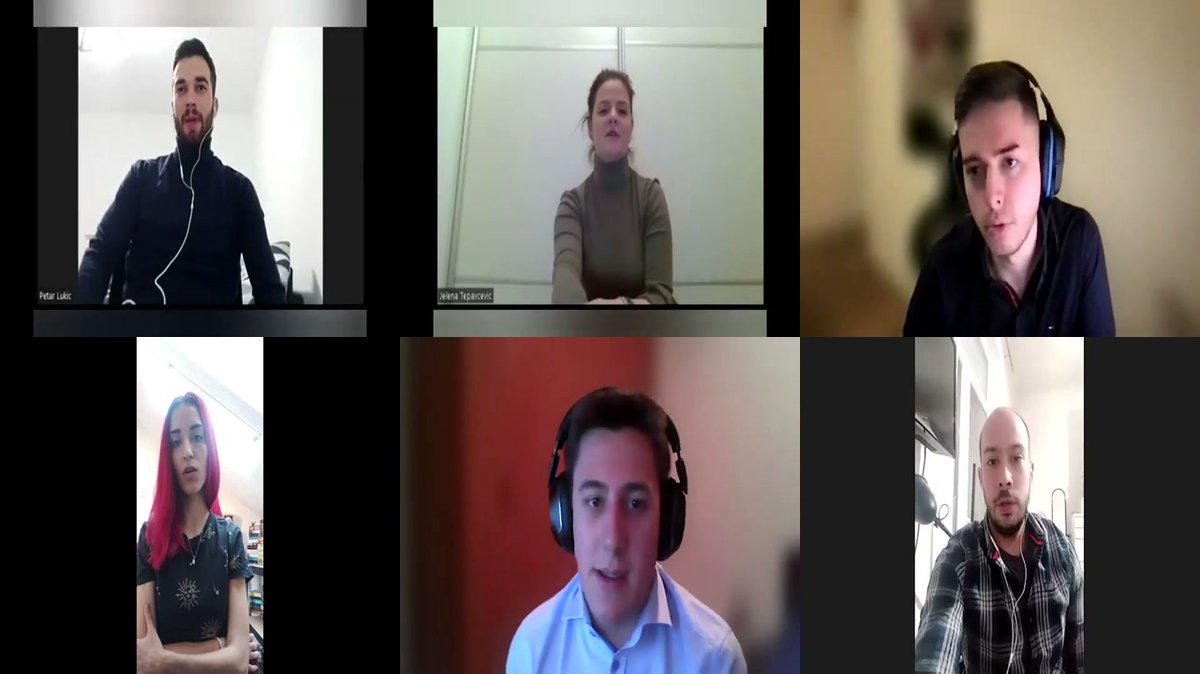 Trading lab 3:42
 Students working through the real-time trading assignment - graded live.
Program at a Glance.
| Master Track Master in Computational Finance | |
|---|---|
| Length | 12 months |
| Coursework | All 5 modules |
| Thesis | Required (16 ECTS) |
| ECTS | 60 ECTS |
| Prior degree | 4-year (240 ECTS) required |
| Nostrification | Required for foreign degrees |
| Outcome | Master degree (CCA cert + diploma) |
Ready to talk?
Schedule a conversation with the Program Leadership to discuss your background, ambitions, and whether MCF is the right fit for you.